Home >> Tours
back


Two Tibetan Summer Grassland Festivals in Kham & Amdo
(Sichuan & Qinghai Provinces) 2010

Khampa Tibetan Horse Race & Amdo Tibetan Shaman Festivals Tour

This is a very special trip designed for those who love nature and are interested in different cultures to study the nomads and their arts, ritualistic festival, very old monasteries, visits with local people, nomads and many different clans of Tibetans on the “Roof of the World”. We will be tracing the routes of early explorers throughout the Tibetan provinces of Sichuan and Qinghai , known as Amdo & Kham. In the summer months of July and August, it is more like a late spring with deep blue skies, billowing white clouds, and green tundra like a carpet laid over rolling hills embroidered with wildflowers. We travel slowly by four wheel drive vehicles caravan-style and have the best hotels available in the remote area, clean with facilities. There will be 3 persons plus 1 driver per each car and a native experienced knowledgeable Tibetan / English speaking tour guide per group. We will have excellent food such as fresh fruit and vegetables, Tibetan yogurt, fresh mutton and yak meat, chicken, eggs, rice, noodles and soup, etc…

Day01 --Arrival in Chengdu (D)
Arrive at Chengdu, the capital city of Sichuan Province and hometown of Chinese Panda. It is one of the densely populated areas in China, centrally located in the western Sichuan Plain, renowned for its fertile land and agricultural wealth as well as its popular and tasty cuisine. There is something for everyone in this city that Marco Polo described as China’s Paris and you will find it both traditional and modern with department stores selling the newest international fashions. Buddhist and Taoist Temples are full of heavy incense with chanting monks and vendors hawking everything from pirated software to chicken feet. People are everywhere as life happens on the streets, in the markets, alleyways, restaurants and roadside shops. It is also one of the major gateways to Eastern Tibet through deep valleys and magnificent gorges along the upper reaches of the Yangtze River from inland China. Overnight Chengdu 4 star hotel

Day02 --Chengdu / Barkham (Maerkang) (B/L/D)
We drive for 360km along the upper reaches of the Yangtze River’s high mountainous region with deep valley and awesome gorges to Barkham, the capital city of Aba( Tib: Ngawa) Tibetan-Qiang Autonomous Prefecture, where features representative Gyarong Tibetan and Qiang architecture and life. Now it is a big and quite modern city and an important trading and traffic center connecting the eastern and western China. The Gyarong is another Tibetan tribe which is different from Golok and Khampa Tibetan. They speak their dialect and maintained unique way of life with their own culture for centuries. The dress is also distinctive. Most of the women wear multi-colored embroidered headscarves and elaborate belts and aprons. Overnight Maerkang 3 star hotel

Day03 15th July --Maerkang / Damba /Ba-me (B/L/D)
Today we drive from Barkham, the northern limit of the Tibetan Gyarong region further to the south through the important Gyarong Gorges which offers you a fantastic view along the main tributary of the Yangtze River. In old days in this area, almost every family has its own block-house built with stones, ascending to heights of between 30-60 meters, which kept the powerful sino-Manchu armies at bay for 10 years during 18th century. We will pass Chuchen County (Jinchuan), lies deep in awesome and unwelcoming Gyarong gorge. Formerly known as Rabden, it was at times the most powerful of the Gyarong kingdoms. The valley looks so beautiful and the farmland rich in many kinds of fruits and grain crops at each bank of the Do-chu (Dadu) river scattered with typical style of Gyarong castle-like stone houses and some with high stone towers. Today we will pass the modern border between Ngawa and Kandze (Ganzi) prefectures and driving into Kham, an amazing and full of mysterious land. We can stop at any villages to taste their fresh fruits and have a nice talking with local people. Lunch will be arranged in Rongtrak (Damba) County. We continue drive for 75km up through thickly forested Tongu-gorge to reach Tongu La pass (3840m), then drive down to Khampa nomadic pasture land to Ba-me, a nice and small town for overnight. Overnight local best hotel

Day04 --Ba-me / Ganzi (Kandze) (B/L/D)
Ba-me is an important road junction to Kandze and to Kangding (Dartsedo). Before starting our trip to Kandze, we need to drive only for 16km to visit Lhagang (Tagong Si) monastery built in 7th century under the advice of Princes Wencheng. A legend said when Princes Wencheng traveled to Tibet, she stayed overnight here, and Jowo Shakyamuni image which she brought as her dowry to Lhasa is said to have spoken out aloud, requesting to be left in that idyllic setting. For thousands of years, pilgrims from Kham who have seen this image will proudly say that the blessing resembles that of seeing the Lhasa Jowo image itself. Then we continue our scenic trip to Kandze, along the fertile meandering Yalong valley and gorges at the confluence of the Zhe-chu with the Yangtze. Kandze was once the largest and most important town in Kham area during the 17th century. Ganzi Gonpa is in town built in 1642 by Mongols who lived here. Overnight Golden Yak 3 star Hotel

Day05 --Ganzi (Kandze) / Derge (Dege) (B/L/D)
This morning at about 7:30 a.m. we will visit the oldest part of Den Gompa to see a prayer ceremony for the local people. Den Gompa is a very important protector monastery for the area. After visit we will continue our trip for 180km to Derge. We will stop in Manigango for a meal and then we head to visit one of the most holy and beautiful lakes, called Yilhun Lhatso. From here we drive up the Tro La Mountain Pass (Alt. 5080m), which offers you spectacular scenery of both sides of the mountain. Overnight Derge 2 star hotel

Day06 --Derge (B/L/D)
Derge in Tibetan means: A village of doing good things. This is a charming place that preserves the old traditional Tibetan way of life. The town is located in a beautiful valley along the Zi-Chu, one of the tributaries of the Yangtze River, flowing rapidly right behind the hotel. We will visit the famous Parkhang Printing House; the printing works is on the second floor, where we may watch actual printing of various text of the Kangyur and Tangyur. Later, we visit Gonchen Monastery, and the old chapel built in memory of Tang Tong Gyelpo, Tibet’s first multi-talented bridge builder, dramatist, engineer, and treasure finder - during the 11th Century. There is much research to be done here that must be documented. Besides beautiful surroundings, youwill be touched by all old monasteries inDerge with a deep impression of this small special town. Overnight Derge Hotel

Day07 -- Derge /Sershul (B/L/D)
Drive 280km to Sershul (Shiqu), a very small andsimple town, asmost of the Tibetan houses are built with timber. Many nomad families come here for shopping and to taste different food in this town. This is the old post road and part of the ancient Tea Horse Trail, where we often see yaks delivering tea. En route, we will visit one of the four most important Nyingma monasteries, Dzogchen Gompa, just 3km off the main road and 53km from Manigango. It is hidden in a beautiful valley (Alt. 4023m) with snow covered mountains and was built in 1684 on the advice of the 5th Dalai Lama. The remainder of the driving on our left, you will enjoy a beautiful snow covered mountain range as well as great view of the grassland all the way to Sershul County.
Overnight Sershul local best hotel

Day08 -- Sershul / Yushu (Jyekundo) (B/L/D)
Drive 160km via Sershul Gonpa to Jyekundo (Yushu), On the way, we may stop for filming at the home of families who weave yak hair fabric to make tents and felt for large capes worn in religious dances. We pass Sershul (Shiqu) Monastery and have time to visit it. Then we drive up to cross over the Ngamba La (Xiewu) pass (4459m), which divides the Yalong and Yangtze basins, as well as the present day provinces of Sichuan and Qinghai. On the descent from the pass there are magnificent views of green grassland covered with different wild flowers and Drogon Monastery clinging to the sheer cliff-face above the town, and painted in the distinctive Sakya colours. From here to Jyekundo (Yushu) is only 50km along the Yangtze River valley. Overnight Yushu3 star hotel

Day09, 10, --Yushu (Jyekundo) Opening Ceremony of Horse Race (B/L/D)
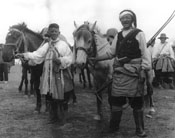
Today is the opening day of the Tibetan Horse Fair. Nomadic families and monks from the surrounding monasteries dressed in their red robes and finery drive or ride into the camping ground and set up their tents for the festival. Everybody was dressed in his or her best chubas and jewelers. Itinerant peddlers come with their wares and local traders set up a big market. There is an opening parade of horsemen, floats from the monasteries, dressed in their finery and even costumes used for the lama dances. One of the most popular programmers during the festival is Tibetan dancing. Costumed girls and men whirl their long sleeves flying. The men’s boots stamp out a strong rhythm and their ankle bells ring; the crowds roar their approval. The crowd also cheers Tibetan singers singing well-known melodies. Perhaps the most popular events are horse racing, acrobatic riding and shooting. Tibetan is fantastic horseman and the speed of the small of their steeds is phenomenal. Recently competitions have been held for the best local costume. This gives a chance for men and woman to wear their smartest clothes and oceans of jellerys. As well as watching the various activities it is very pleasant to stroll round the fair and meet the local people who often generously invite you to tea and delicacies in their tent.
Overnight Yushu Hotel

Day11 --Jyekundo / Madoi County (B/L/D)
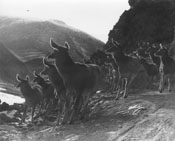
Drive 360km up to Matoi (Maduo, alt: 4200m). Today’s driving is exiting; we enjoy beautiful landscape and gorges of upper reaches of the Yangtze and Mekong Rivers, the famous mountain pass Bayankala at elevation 5080m and pass the first bridge of the Yellow River. Those landscapes present an amazing picture. Under the blue sky with white clouds, you see different types of mountains decorated with pray flags, beautiful grassland embellished with flock of yak and sheep, nomad’s black and white tents, the colorful dressed Khampa and Golok people, while some different sects of old monasteries on the way brings you back to the nature. Madoi means the place where the Yellow River originates. It is the nearest city to the source of the Yellow River. The road from here to central Tibet has been considered one of the most important roads for centuries. Overnight Maduo Hotel

Day12 -- Matoi / Machen (B/L/D)
It is an interesting drive to Machen (Maqing, alt:2900m) the Tibetan Golok capital, an important stopping point for the ancient caravans that passed through Xining and on to Lhasa. The Goloks in the past were the most feared Tibetans who live nearest to wildest nature for thousands of years. If the weather is fine we should see Amnye Machen (Animaqin), once thought to be higher than Mount Everest. In the 1960's the height was fixed at 6282 m.(20,604 ft.). Amnye Machen is the sacred home of the protector deity Machen Pomra, revered by Bonpo and Buddhists alike. It is a day of wonderful “skyscapes” and rolling pastureland grazed upon by sheep and yaks. We’ll picnic on the open plateau among the wild flowers. We encounter a great variety of landscapes; from a sea of sand with huge dunes and a heavily eroded landscape of strange shapes, to pastureland. This is where Golok nomads can be seen herding their flocks of sheep and yaks, living for the summer in black yak hair tents. We will stop at a high mountain pass en route and admire the huge lhatses of colored flags and spears. These are refurbished every year by the men of the family in honor of the Mountain Gods. The altitude increases to 3800 m. (12,464 ft.) here but we shall be acclimatized as we have driven higher slowly. Overnight local best Hotel.

Day13 -- Machen / Padma (Banma) (B/L/D)
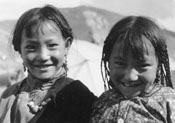
Drive for 320km to Padma. Another wonderful day for photographing and filming picturesque landscapes with yaks and sheep, nomadic black yak hair tents and blue and white appliquéd summer tents. We will pass over at least three big mountain passes with altitude over 4200 meters; consecrated with different colored pray flags. You will meet many typical Golok nomadic people on the way, they are strong and nice, every aged people’s charming face just like a world classics. Banma is not officially open for foreign visitors but we have permits to visit three old monasteries with distinctive features that will deeply impress you for a long time. On arrival, The first monastery we will visit is Jonang Sect Yartangjia (Akyong gya)Gompa, founded in the 13th century. There are three beautiful chortens - tower-like temples with big eyes on them representing the eyes of Buddha. Nearby is a most unusual stone complex called Jaree, belonging to another sect. Just down the road is the Nyingma monastery of Jangritang Gompa. There is a beautifully crafted wooden tower surrounded with about a hundred chortens of different sizes. The valley is beautiful and there is a nearby sky burial site marked by thousands of colored prayer flags. Overnight local best hotel

Day14 -- Padma / Ngawa (Aba) (B/L/D)
We travel via Jigdril (Jiuzhi) to Ngawa (Aba. Alt: 3200m) and our journey take us approximately 280km through the most beautiful part of Eastern Tibet. We climb up a pass to 4200m and have a breathtaking view of a great mountain chain, which includes many holy mountains of the Golok Tribe, rising to 5000m. At the pass colored prayer flags flap and for those interested in flowers we can usually find some spectacular white and blue gentians. Descending the high pass we have views of misty mountain ranges and lower down on rich grassland there are nomadic encampments with huge flocks of yak and sheep. Black and white tents with smoldering fires are scattered across the vast landscape which has a backdrop of mountain and above are blue skies and fluffy clouds. This will also be an ideal spot for our picnic. We hope to visit a Red Sect monastery which lies off the road but it is a matter of timing and how much time we have spent with the nomads. However, we will certainly visit a Yellow Sect Monastery, which stands on the road with a huge mani wall and a particularly unusual configuration of white and grey prayer flags arranged in a tent like structure. In the banks along the road are unusual pendulous red poppies. We shall probably arrive late at our hotel as there is just so much to see. Overnight Ngawa

Day15 --Ngawa (Aba) (B/L/D)
Ngawa could be one the best places to see different old sect monasteries, which are rear to see in other parts of Tibet. Such as Bon Religion, a very old indigenous religion of Tibet once dominated Tibetan’s spiritual life before the Buddhism was introduced to Tibet during 7th century, Nangshuk (Narshi) Monastery is the largest Bon monastery in Tibet with 800 monks. The Bon religion was started in Tibet at least 6,000 years ago and some monks in this monastery said the time can be even earlier about 9,000 years old ago. We will also visit one of the oldest Jonangpa Monastery housing about a thousand monks. The Jonangpa sect was founded in the middle of the 13th century and became one of the strangest religions in Tibet and spread to Amdo during that time. In the 17th century, the 5th Dalai Lama changed most of the Jonangpa monasteries to the Gelukpa sect and only a few Jonangpas were left in remote areas such as Dzamtang, Padma and Ngawa. We will visit Kirti Gompa in the center of town. It is one of the largest scale monasteries in Aba County, built in the 15th century and has more than a thousand monks.
Overnight Ngawa

Day16 -- Ngawa / Dzoge (B/L/D)
Drive 300km to Dzoge County (Roergai Alt: 3200m), we will cross over two passes, the first with an elevation of 3700m and second 4000m where you will have great views to look far into the distance with endless high mountain grasslands which rise and fall like a slithering dragon. Then we drive down to Mewa (Hongyuan) and Zungchu (Songpan) grasslands with low hills, broad grassy valleys and meandering rivers. We will travel through swampy grassland which offers abundant supplies of water and forage grass, dotted with herds of sheep, yaks and nomads ‘black yak-hair tents. They are abundant here because the rich grazing land supports vast herds of livestock. As the land around Dzoge is classic yak-herding County, when entering the town, you are into a wild and wooly Tibetan nomadic world: dressed in little more than filthy sheepskin chubas edged with fur, ride into town to barter skins or shoot pool in the market square. Overnight Dzoge

Day17 -- Dzoge / Labrang (B/L/D)
Our journey takes us from Dzoge via Gannan (Ganhol) Tibetan Autonomous Prefecture of Gansu Province to Labrang, a distance of approximately 290km. Half of our driving is along a high windswept marshland and an extensive grassland which rises to 3292m, here nomads graze their large flocks of yaks and sheep living in hand-woven black yak hair tents. We drive down approaching to the lower altitude at 2900m near Labrang, the yaks’ hair shorter and shorter because of warmer climate. Overnight Labrang

Day18 -- Labrang / Repkong (Tongren) (B/L/D)
In the morning we have a guided tour to visit Labrang Monastery, one of the most powerful monasteries in Amdo built by first Jamyang Zhepa in 1709, under the patronage of a prince of the Qosot Mongolians. Its great assembly hall and related schools, surrounded by lots lying monks’ quarters stretching along the valley is surrounded by the sacred way lined with thousands of prayer wheels. Our Tibetan guide will show you the impressive interior of the Assembly hall and other temples. We will be introduced to the Buddha images and numerous protective deities. After lunch we drive for about three hours to Tongren (Repkong), a charming Tibetan town hidden in a red mountain valley and known to be the learning center for Tibetan Tangkha painting and the arts of sculpting since 16th century. Overnight Repkong

Day19, 20 -- Repkong (Tongren) Shaman Festivals (B/L/D)
The Shaman’s Festivals originated from old Bon traditions. July or August there is a most unusual secular festival in each of the villages in Repkong. The offerings are quite beautiful and the unique ceremonies are wild at times. We need to capture the fast moving activities of the shamans in different villages who conduct this important ceremony which honors the local mountain god and asks for the good health of the village and a successful harvest for the local community. The people reins act the Bon traditions and they worship the Mountain Gods, butter effigies of a goat, sheep and yak are burnt as a sacrifice to the god. Various ceremonies go on all day, watched by the whole of the village dressed in their best clothes. The male members of the village dance in front of the shaman and at the height of the ceremony long needles are placed in their back and through their mouths. The men continue dancing, with the needles implanted to the beat of the goatskin drum. Beautifully costumed women with headdresses of coral dance an elegant dance to the god. In-between costumed comedy skits are enacted by villagers. Each village ceremony is a little different and we will visit at least three different villages which have costumes and traditions. We also visit to the famous Sengeshong art schools on the outskirts of town including visit with individual artists and their gallery area. The last day of the festival is the best and we will go to a small village to see their well-organized finale. Overnight Repkong

Day21 -- Repkong / Xining /Beijing (B/L/D)
Depart from Xining airport flying to Beijing. Free at leisure. Peking Duck Farewell Dinner.
Overnight Beijing

Day22 --Beijing / Back home (B)
Depending on your departure flight, you will be transferred to Beijing International Airport to take your flight back home.


wetours@gmail.com h_qingcn@yahoo.com.cn info@west-eastours.com


(C)2007-2010 west-eastours.com. All Right Reserved. Designed by Jiyelan(JYL) Media (info@jiyelan.com)